
Why You Should Fix Your Website Before Running Ads
Many tradies make the same mistake when they decide they want more leads. They jump straight into Google Ads, Facebook Ads or other forms of paid advertising without first looking at their website.
The thinking is usually simple: "If I spend money on advertising, I'll get more enquiries."
Unfortunately, it rarely works that way.
While advertising can generate traffic, your website is what converts visitors into leads. If your website isn't doing its job, you'll simply end up paying for clicks that never turn into phone calls, quote requests or booked jobs.
At Toolbox Marketing, we regularly speak with tradies who have spent thousands of dollars on advertising campaigns with very little to show for it. In many cases, the problem isn't the ads. The problem is the website.
Before you spend a single dollar on advertising, your website should be capable of converting visitors into customers. Otherwise, you're effectively pouring water into a bucket full of holes.
Your Website Is Your Salesperson
Think of your website as your digital salesperson.
When someone clicks on your ad, visits your Google Business Profile or finds you through organic search, they're usually landing on your website.
At that point, the website takes over.
Your website needs to:
- Build trust
- Explain your services
- Showcase your work
- Answer common questions
- Make it easy to contact you
- Convince visitors to choose your business
If it fails to do those things, people leave.
The quality of your advertising becomes irrelevant because the website isn't converting the traffic you're paying for.
More Traffic Doesn't Automatically Mean More Leads
One of the biggest misconceptions in digital marketing is that more traffic equals more enquiries.
The reality is that traffic alone means very little.
Let's say you spend $1,500 per month on Google Ads and receive 500 website visitors.
That sounds great.
But if only one person contacts you, your website is converting at 0.2%.
Now imagine you improve your website and convert 5% of visitors instead.
Without increasing your advertising budget, those same 500 visitors could generate 25 enquiries instead of one.
That's why website optimisation often delivers a better return than simply increasing ad spend.
First Impressions Matter
Tradies are often competing against several other businesses when a customer is researching online.
If someone searches:
- Roof restoration company
- Local plumber
- Electrician near me
- Pool builder
They're usually comparing multiple businesses.
If your website looks outdated, slow or unprofessional, many potential customers will immediately move on to the next option.
Whether it's fair or not, people make assumptions about your business based on your website.
A poor website can make customers question:
- Your professionalism
- Your reliability
- Your attention to detail
- The quality of your work
A modern, well-designed website creates confidence before you've even spoken to the customer.
Slow Websites Kill Conversions
Website speed is one of the biggest conversion killers we see.
Most users expect pages to load almost instantly.
If your website takes several seconds to load, many visitors simply leave.
This becomes even more important when you're paying for advertising.
Imagine paying $5, $10 or even $20 per click through Google Ads only to have visitors leave because your website loads too slowly.
That's money wasted before you've even had a chance to sell your services.
Fast-loading websites provide a better user experience and typically convert significantly better than slow websites.
Mobile Optimisation Is Essential
For most tradies, the majority of website visitors now come from mobile devices.
People search while:
- Sitting at home
- Driving between jobs
- At work
- Looking for urgent repairs
If your website doesn't work properly on mobile devices, you're likely losing a huge percentage of potential enquiries.
Common mobile issues include:
- Text that's difficult to read
- Buttons that are too small
- Forms that are hard to complete
- Images that don't display correctly
- Slow page loading
A mobile-friendly website should be considered a requirement, not a bonus.
Your Website Needs Clear Calls To Action
Many tradie websites make visitors work too hard.
Customers shouldn't have to search for your phone number or figure out how to request a quote.
Every page should clearly guide visitors towards taking action.
Examples include:
- Call Now
- Request A Quote
- Book An Inspection
- Get A Free Estimate
- Contact Our Team
The easier you make it for customers to contact you, the more enquiries you'll receive.
When we review websites, one of the most common issues we find is unclear or missing calls to action.
Trust Is Everything
Before contacting a tradie, most customers want reassurance that they're choosing the right business.
Your website should provide trust signals throughout the entire customer journey.
These may include:
- Google reviews
- Testimonials
- Project photos
- Before and after images
- Industry licences
- Insurance details
- Years of experience
- Team information
- Supplier partnerships
The more trust you build, the more likely visitors are to contact you.
A website with no proof, no reviews and no project photos often struggles to convert regardless of how much traffic it receives.
Quality Photos Make A Huge Difference
This is particularly important for trades.
Customers want to see examples of your work.
Professional project photos help demonstrate:
- Workmanship
- Experience
- Attention to detail
- Project quality
We often see tradies spend thousands on advertising while using poor-quality website images taken years ago.
In many cases, simply updating project photography can improve conversion rates significantly.
People buy based on what they see.
Strong visual content helps visitors picture the results you can deliver.
SEO And Ads Work Better Together
Another reason to fix your website first is because both SEO and Google Ads rely heavily on website quality.
Google Ads uses something called Quality Score.
Part of that score is based on the experience users have when they land on your website.
A poor website can result in:
- Higher cost per click
- Lower ad positions
- Reduced visibility
- More expensive leads
Meanwhile, SEO relies on quality content, user experience and website structure to achieve rankings.
A strong website helps both channels perform better.
Your Website Should Answer Customer Questions
One of the easiest ways to improve conversions is to answer the questions customers are already asking.
Think about the conversations you have every day.
Customers often ask:
- How much does it cost?
- How long will it take?
- What areas do you service?
- Are you licensed?
- Do you offer warranties?
- What products do you use?
If your website answers these questions clearly, visitors are more likely to contact you.
When information is difficult to find, many users simply leave and contact a competitor instead.
Common Problems We See On Tradie Websites
At Toolbox Marketing, we review tradie websites every day.
Some of the most common issues include:
Outdated Design
Websites that look 10 years old often struggle to build trust.
Poor Navigation
Visitors can't easily find the information they're looking for.
Weak Service Pages
Pages contain very little information about services.
No Location Pages
Businesses fail to target suburbs and service areas properly.
Poor Mobile Experience
Websites don't function correctly on smartphones.
No Reviews
There is little social proof or credibility.
Weak Contact Options
Customers struggle to make contact.
Slow Loading Speeds
Pages take too long to load.
Any one of these issues can reduce your conversion rate significantly.
Advertising Amplifies Existing Problems
One way to think about advertising is that it amplifies whatever already exists.
If you have a great website, advertising can generate excellent results.
If you have a poor website, advertising simply exposes more people to that poor experience.
This is why throwing money at ads doesn't magically solve marketing problems.
Advertising should accelerate a system that's already working.
Your website is the foundation of that system.
The Best Marketing Investment For Most Tradies
Many tradies assume advertising should be their first marketing expense.
In reality, a high-quality website often delivers a better return.
Before increasing ad spend, ask yourself:
- Does my website look professional?
- Is it mobile-friendly?
- Does it load quickly?
- Does it showcase my work?
- Does it build trust?
- Is it easy to contact me?
- Does it clearly explain my services?
If the answer to any of these questions is no, fixing those issues should be your priority.
Once your website is converting visitors effectively, every dollar spent on SEO or advertising becomes far more valuable.
Conclusion
Running Google Ads or Facebook Ads before fixing your website is like filling a leaking bucket. You can keep pouring money into advertising, but if your website isn't converting visitors into enquiries, much of that investment will be wasted.
For most tradies, the website should be the first marketing priority. A professional, fast, mobile-friendly website that builds trust and makes it easy for customers to get in touch will consistently outperform a poor website, regardless of advertising budget.
At Toolbox Marketing, we've found that businesses often see the biggest improvements not by spending more on ads, but by improving the website those ads are sending traffic to. Once your website is working properly, every marketing channel becomes more effective, helping you generate more enquiries and achieve a stronger return on investment.
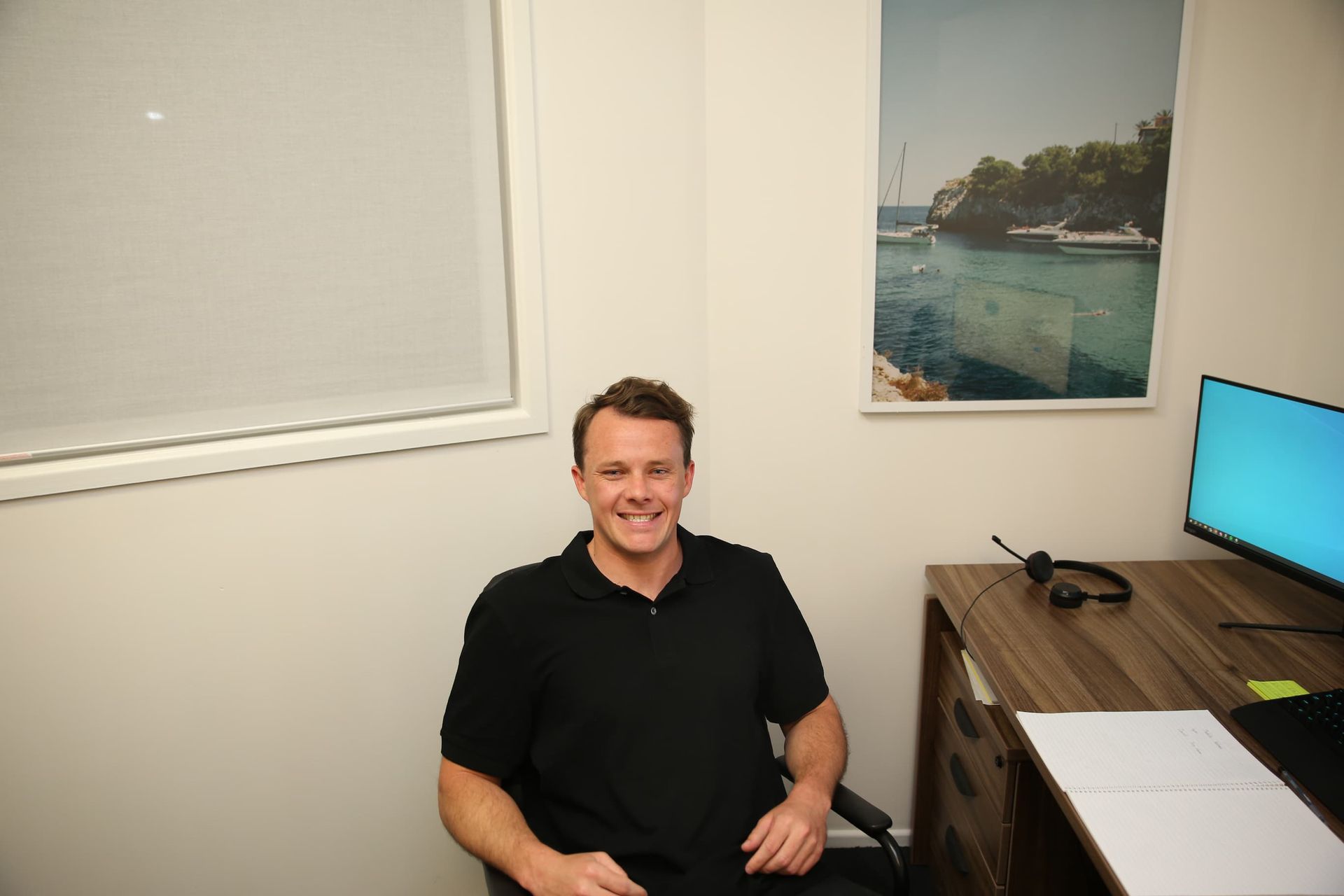
Written by Tristan Evert
Tristan is an award-winning writer, journalist and marketing professional with over a decade of industry experience. From custom-built websites for roofing companies to blog posts for landscapers, there isn't much he hasn't covered when it comes to the trade sector.

